Sunday, October 28, 2012

Gyeogju


Gyeogju is a historic city because this city was once the capital of the ancient kingdom of Silla (57 SM - 934 M at the end of the first millennium, which runs almost the entire Korean peninsula (age 7-9). Relics of temples, palaces, pagodas, statues and cultural artifacts from the Silla kingdom make Gyeogju had the nickname "museum without walls site" so no wonder UNESCO Gyeogju set a world heritage site since 2000.

Possess extensive Gyeongju City 1324 km ² (511 mi ²), located on the coast of the East Sea, in the southeastern corner of North Gyeongsang Province, South Korea. Gyeongju is located 370 km (230 miles) southeast of Seoul, and 55 km (34 miles) from the provincial capital, Daegu. Gyeongju is also adjacent to the town Cheongdo and Yeongcheon in the west, and bordered by two large industrial centers Ulsan in the south and Pohang to the north.
In addition to the strategic city of Gyeongju is a popular tourist spot because it has a long history and beautiful natural scenic. Gyeongju is also connected to the railway network and the national highways facilitate traffic and tourism industry. Here are some of the tourist attractions in Gyeogju:
Geumgwanchong Tomb
Daereung-won Tumuli Park / Cheonmachong Tomb

 
Cheomseongdae Observatory


Poseokjeong Pavilion
 
Seokguram Grotto
 
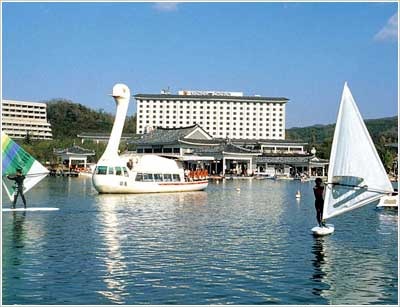
Bomun Lake Resort

Saturday, October 27, 2012

Bulguksa


Bulguksa (Temple of Buddhist Affairs) is one of the World Heritage Site has been established by UNESCO in 1995 is located at the foot of Mount Toham located in Gyeongju, South Gyeongsang Province, South Korea.
Bulguksa temple Bulguk or 7 pieces save a national treasure of South Korea is still well is heritage site Silla royal era. Shrine was founded in 751 M during the reign of Gyeongdeok and Prime Minister Kim Daeseongyang building construction. Was completed in 774 M along with the death of the prime minister called Bulguksa building.
Bulguksa also was undergoing renovation at the time of the early Goryeo and Joseon Dynasty, but because of the Japanese invasion of Korea which occurred between the years 1592 - 1598 Bulguksa suffered destruction.
In the Japanese occupation had been a valuable asset renovations but many temples were lost to the government of President Park Chung Hee between 1969 and 1973 held a major renovation - assault on Bulguksa up again as before sometimes.
Bulguksa has a unique architecture that is recorded as a Korean national treasure among which Sokgyemun gate is decorated by stone steps leading kuil.Selain that there are two stone pagodas are Seokgatab (Sakyamuni Pagoda) is a typical pagoda in most Buddhist temples in Korea and Dabotab (Pagoda Abundant assets) has a rich architectural ornament.